إعـــــــلان

Collapse

.

,
See more
See less

حساس الأكسجين ......كلاكيت تانى مره

Collapse
X
 
  • Filter
  • الوقت
  • Show
Clear All
new posts

  • #16
    المشاركة الأصلية كتبت بواسطة samirayad مشاهدة المشاركة
    _ ......
    _ لو قام الحساس بالتعرف على أن الأكسجين الخارج مع العادم نسبته قليله عن الوضع المثالى للحريق ....بنقول فى الحاله دى أن المحرك بيمر بدوره حريق هزيله (ضعيفه ) بسبب كون الخليط المحترق داخل غرف الحريق بيكون فيه الهواء فيه أكبر من المقرر لحرق البنزين lean mixture
    [/RIGHT]
    ......
    _ لو الحساس لقى نسبة الأكسجين اللى خارجه مع العادم كتير عن الحدد المثالى ....بنقول أن المحرك بيمر بدورة حريق غنيه rich mixure
    ....علشان الهواء اللى فى غرف الحريق أاقل من المطلوب للحريق المثالى (وبكده المحرك بيأكل بنزين ).....[RIGHT]_ [/img][/url]
    هندسه انت لخبطتنى
    هو ترتيب الكلام ده بالنسبه لنسبة الاكسجين كده صح؟
    مش فى lean mixture بيكون الاكسجين اكثر من البنزين؟
    و فى rich mixture البنزين اكثر من الاكسجين؟ يعنى مفيش اكسجين كفايه علشان احرق كل البنزين؟ علشان كده بالبلدى بنقول ان العادم نى!!
    لكل داء دواء يســتطاب به اْلا الحماقة أعيت من يداويها
    يخاطبنى الســـفيه بكل قبح فأكره أن أكون له مجيبا
    يزيد ســـفاهة فأزيد حــلما كعود زاده الاْحراق طيبا

    Comment


    • #17
      المشاركة الأصلية كتبت بواسطة ameersaeed مشاهدة المشاركة
      موضوع متميز ومفيد ..شكرا وجزاك الله خيرا يا أخي.
      المشاركة الأصلية كتبت بواسطة BASKOTA مشاهدة المشاركة
      شكرا عالموضوع والمجهود الجامد
      أما أشكر أخوانا الأفاضل ......وأراجع معاك على طول............

      Comment


      • #18
        المشاركة الأصلية كتبت بواسطة l0new0lf مشاهدة المشاركة
        هندسه انت لخبطتنى
        هو ترتيب الكلام ده بالنسبه لنسبة الاكسجين كده صح؟
        مش فى lean mixture بيكون الاكسجين اكثر من البنزين؟
        و فى rich mixture البنزين اكثر من الاكسجين؟ يعنى مفيش اكسجين كفايه علشان احرق كل البنزين؟ علشان كده بالبلدى بنقول ان العادم نى!!
        هو كلامك مظبوط ميه ميه طبعا ........بس أنا بانظر من زاويه تانيه........
        _ وكمثال .....لما العادم اللى خارج يكون فيه الأكسجين كتير .......يعنى اللى أنحرق جوه أيه من الأكسجين (قليل طبعا )... .......وكده الوحده حتدى بنزين كتير بناء عن أشارة الحساس وملهاش دعوه باللى جوه ..... ......ماشى الحال........يبقى الحريق جوه نظامه أيه قبل التعديل اللى حيتم rich mixture
        ......يبقى دلوقتى الحريق غنى والوحده المفروض حتعدله فى دورة الحريق اللى جايه............والمفروض يتحول لحريق مثالى perfect mixture............
        _ وأهمس فى أذنك هى حاجه تلخفن بدون شك.............

        Comment


        • #19
          المشاركة الأصلية كتبت بواسطة l0new0lf مشاهدة المشاركة
          هندسه انت لخبطتنى
          هو ترتيب الكلام ده بالنسبه لنسبة الاكسجين كده صح؟
          مش فى lean mixture بيكون الاكسجين اكثر من البنزين؟
          و فى rich mixture البنزين اكثر من الاكسجين؟ يعنى مفيش اكسجين كفايه علشان احرق كل البنزين؟ علشان كده بالبلدى بنقول ان العادم نى!!
          _ برضه عندى تحفظ بسيط لو تسمحلى على كلامك ......وطبعا المعنى مظبوط جدا .............وعادى عاوز رأيك فى كلامى اللى حقوله .....لأن الهدف نحط أيدينا على الحقائق المقبوله فنيا ................
          _ حضرتك بتقول الحريق الغنى كمثال بيكون فيه البنزين أكبر من الهواء أو الأكسجين أن صح التعبير .........طبعا المعنى تمام
          _ وطبعا نحن نعرف أن الحريق المثالى بيكون فيه نسبة الهواء للبنزين بالعلاقه الوزنيه أو الحجميه (على أى حال من الأحوال ) هى 14.7: 1 ........يعنى كل 14.7 جرام من الهواء بيلزم لهم 1 جرام من البنزين ( علشان الحريق يبقى مثالى ).......
          _ أظن مش معقول لما يبقى الحريق غنى أن نسبة البنزين حتكون أكتر من 14.7 (علشان البنزين يبقى أكتر من الهواء أو الأكسجين )........صعبه قوى دى ......
          _ وأعتقد أن النسبه حتكون كمثال 14.7 : 5 مثلا............!!!!!!!!!!!!
          _ يعنى فى الحاله دى كل 14.7 جرام هواء حيكون بيحرقهم 5 جرام من البنزين .......يعنى فيه حيود عن النسبه بتاعة البنزين عن الوضع المثالى بالزياده بمعدل 4 جرام ...........أيه رأيك فى الكلام ده...................
          _ على فكره أن بأكلمك من معلوماتى القديمه اللى درستها............وممكن أكون مخطىء ......بس مش عارف ليه أن مقتنع أن اللى بأقوله صح ......والا فى حاله زى اللى بتقولها دى ......حيكون أستهلاك البنزين صعب جدا
          _ يبقى يجب أن نقول أن نسبة البنزين بتكون زياده عن الوضع المقرر عن الحريق المثالى.......اللى هو 1 جرام فى العلاقه السابقه 14.7 :1
          ........

          Comment


          • #20
            تسلم يا بشمهندس
            بس هوا الحساس ده موجود فى انهى عربيات
            يعنى هل هوا موجود فى لانسر 2002 و اقدر اعرف هوا سليم و لا بايظ ازاى ؟
            و دوره الحريق فيها مغلقه ولا مفتوحه ؟
            معلش تعبتك بس عاوز اعرف يعنى

            Comment


            • #21
              تسلم يا باشمهندس الله ينور عليك
              [SIZE=3][COLOR=blue][I][U]Ahmed Farahat[/U][/I][/COLOR][/SIZE]

              Comment


              • #22
                المشاركة الأصلية كتبت بواسطة dr.ayman مشاهدة المشاركة
                تسلم يا بشمهندس
                بس هوا الحساس ده موجود فى انهى عربيات
                يعنى هل هوا موجود فى لانسر 2002 و اقدر اعرف هوا سليم و لا بايظ ازاى ؟
                و دوره الحريق فيها مغلقه ولا مفتوحه ؟
                معلش تعبتك بس عاوز اعرف يعنى
                الله يخليك يادكتور.......لو أستهلاك البنزين عندك تمام .....يبقى مفيش مشاكل ..............
                _ والحساس ده موجود فى كل العربيات الحديثه ( ذات الحقن الألكترونى الكامل ) الأنجكشن الكامل ......
                _ ووظيفته بيخللى وحدة التحكم تصحح الحريق للنسب التمام ....طالما يؤدى وظيفته على مايرام ......وأنا حاليا جمعت شوية معلومات للـاكيد على آداءه عند ملاحظة أى خلل فى الآداء وحكتبهم أن شاء الله بعد صلاة العشاء بأذن الله .....

                Comment


                • #23
                  المشاركة الأصلية كتبت بواسطة ahmedfra مشاهدة المشاركة
                  تسلم يا باشمهندس الله ينور عليك
                  الله يخليك يا أحمد باشا ......على فكره موضوعك ممكن يكون سببه برضه .....أن حساس الكرنك ( الفيشه بتاعته عاوزه تتنظف ....لأن لو ملمس نصف ونصف ممكن يعمل النفضه اللى بتقول عليها ) طبعا مع تأمين دوره الأشعال والبنزين....ولو عاوز نفكر تانى طلع الموضوع عندنا فى الدايو .......وقول على الجديد عندك........لأننى نفسى أخدم طبعا بحق الزماله

                  Comment


                  • #24
                    أستكمالا لوعدى الى الزملاء الأفاضل ..................
                    _ كيف نحافظ على آداء جيد لحساس الأكسجين........
                    1- التأكد من عدم وجود تسريب لغازات العادم من مانيفولد العادم ( فرن الشكمان ).............
                    2- التأكد من جودة عمل حساس الأيرماس ( أن وجد ) فى السياره .........
                    3- التأكد من عدم وجود تسريب من منطقة مجمع الهواء PLENUM
                    (الأنتفاخ المعدنى بعد بوابة جسم الخانق )......أو من خلال جسم الخانق نفسه ..................أو بسبب تلف الجوان الخاص بمانيفولد الهواء.....أى مشعب الهواء اللى راكب على جسم المحرك.........
                    4- التأكد من عدم تواجد ماء بصدأ متخللا فيشة الحساس ...أو تواجد نسب من الصدأ داخل الفيشه نفسها .....وبالذات مع مراحل الغسيل المتكرر لغرفة المحرك .........
                    5- التأكد من جودة البطاريه والدينامو ....وأرضى السياره وأرضى وحدة التحكم .............
                    6- الـتاكد من عدم وجود تآكل فى أطراف فيشة الحساس مع ضمان جودة أتصال الفيشه نفسها........
                    7- تلوث جسم الحساس بنواتج الأحتراق الخارجه مع العادم ....وبالذات حينما يكون هناك تفويت من خلال شنابر المحرك للكرتير والتى تجعل خط الفائظ محملا بنسب من الزيوت .....أو من خلال الصبابات .....حيث أن هذا يؤدى الى جعل نواتج الأحتراق تحتوى على نسب من الزيت .....تساعد على تلوث الحساس .....مما يجعله غير قادر على آداء وظيفته على مايرام ..........................
                    _ طبعا الحاجات دى بنتأكد منها حينما نلاحظ أختلال أو وضع غير طبيعى لا نرضاه...................أشكركم

                    Comment


                    • #25
                      معلوماات مفيده جدا يا بشمهندس سمير
                      بس انا عربيتى كربيراتير مش انشجكشن فهل يبقى فيها الحساس ده ولا لأ ؟
                      معلش تاعبك معايا

                      Comment


                      • #26
                        المشاركة الأصلية كتبت بواسطة samirayad مشاهدة المشاركة
                        هو كلامك مظبوط ميه ميه طبعا ........بس أنا بانظر من زاويه تانيه........
                        _ وكمثال .....لما العادم اللى خارج يكون فيه الأكسجين كتير .......يعنى اللى أنحرق جوه أيه من الأكسجين (قليل طبعا )... .......وكده الوحده حتدى بنزين كتير بناء عن أشارة الحساس وملهاش دعوه باللى جوه ..... ......ماشى الحال........يبقى الحريق جوه نظامه أيه قبل التعديل اللى حيتم rich mixture


                        ......يبقى دلوقتى الحريق غنى والوحده المفروض حتعدله فى دورة الحريق اللى جايه............والمفروض يتحول لحريق مثالى perfect mixture............
                        _ وأهمس فى أذنك هى حاجه تلخفن بدون شك.............


                        يا ساده...
                        أسمحو لى ان اوضح النقطه دى لانها اهم ما فى الموضوع:

                        فى نظم التحكم عموما فى نوع اسمه Closed Loop Control System او نظام التحكم المغلق وده معناه تقييم خارج النظام وحساب نسبة الخطأ الـ Error وتعديل الداخل له بناء على نسبة الخطأ دى.

                        فى حالة نظام حقن البنزين الالكترونى بيستخدم حساس الاكسوجين (وأحيانا بيعرف باسم حساس لامدا Lambada sensor ) لتقييم احتراق المحرك واعطاء feed back الى وحدة التحكم للتصحيح كما يلى:

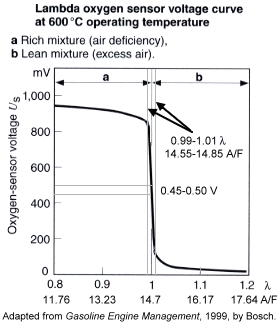
                        لو قراءة حساس الاكسوجين كبيره (حوالى 0.9 فولت) ده معناه ان تقريبا ما فيش اكسوجين موجود فى العادم (وتم استهلاك كل الاكسوجين اللى موجود بالهواء لحرق الوقود) وتحليل ده: ان كمية الوقود اللى تم حقنها كانت اكبر من كمية الهواء اللى دخلت المحرك (مخلوط غنى) فتقوم وحدة النحكم بتقليل كمية الوقود من خلال تقليل الفتره الزمنيه لفتح الرشاشات.

                        لو قراءة حساس الاكسوجين صغيره (حوالى 0.1 فولت) ده معناه ان فى اكسوجين موجود فى العادم وتحليل ده ان كمية الوقود اللى تم حقنها كانت أقل من كمية الهواء اللى دخلت المحرك (مخلوط فقير) فتقوم وحدة التحكم بزيادة كمية الوقود من خلال زيادة الفتره الزمنيه لفتح الرشاشات.

                        الموضوع ده بيتكرر اكتر من الف مره فى الثانيه (علشان كده سموها loop)لتصحيح نسبة خلط الهواء الى البنزين وجعلها قريبه من النسبه المثاليه 14.7 جرام هواء الى 1 جرام بنزين
                        (stoichiometric ratio) وده بيضمن تقليل استهلاك الوقود - الحفاظ على البئيه.

                        برجاء مراجعة المنحنى ده:


                        Comment


                        • #27
                          المشاركة الأصلية كتبت بواسطة samirayad مشاهدة المشاركة
                          _ برضه عندى تحفظ بسيط لو تسمحلى على كلامك يبقى يجب أن نقول أن نسبة البنزين بتكون زياده عن الوضع المقرر عن الحريق المثالى.......اللى هو 1 جرام فى العلاقه السابقه 14.7 :1 [/COLOR][/RIGHT]........[/RIGHT][/RIGHT][/RIGHT][/RIGHT][/RIGHT][/RIGHT][/COLOR]
                          I am sorry for confusing everybody, I was referring to the 14.7:1 ratio when I said more oxygen or more gasoline

                          so, lets explain this 14.7:1 ratio and why not 20:1 for example:

                          in Octane-rating scale, n-Heptane is the zero point of the octane rating scale. It is undesirable in petrol, because it burns explosively, causing engine knocking, as opposed to branched-chain octane isomers, which burn more slowly and give better performance. It was chosen as the zero point of the scale because of the availability of very high purity n-heptane, unmixed with other isomers of heptane or other alkanes, distilled from the resin of Jeffrey Pine and from the fruit of Pittosporum resiniferum. Other sources of heptane and octane, produced from crude oil, contain a mixture of different isomers with greatly differing ratings and do not give as precise a zero point.

                          A mixture is the working point that modern engine management systems employing fuel injection attempt to achieve in light load cruise situations. For gasoline fuel, the stoichiometric air/fuel mixture is approximately 14.7 times the mass of air to fuel. Any mixture less than 14.7 to 1 is considered to be a rich mixture, any more than 14.7 to 1 is a lean mixture- given perfect (ideal) "test" fuel (gasoline consisting of solely n-heptane and iso-octane). In reality, most fuels consist of a combination of heptane, octane, a handful of other alkanes, plus additives including detergents, and possibly oxygenators such as MTBE (methyl tert-butyl ether) or ethanol/methanol. These compounds all alter the stoichiometric ratio, with most of the additives pushing the ratio downward (oxygenators bring extra oxygen to the combustion event in liquid form that is released at time of combustions; for MTBE-laden fuel, a stoichiometric ratio can be as low as 14.1:1). Vehicles using an oxygen sensor(s) or other feedback-loop to control fuel to air ratios (usually by controlling fuel volume) will usually compensate automatically for this change in the fuel's stoichiometric rate by measuring the exhaust gas composition, while vehicles without such controls (such as most motorcycles until recently , and cars predating the mid-1980s) may have difficulties running certain boutique blends of fuels (esp. winter fuels used in some areas) and may need to be rejetted (or otherwise have the fueling ratios altered) to compensate for special boutique fuel mixes. Vehicles using oxygen sensors enable the air-fuel ratio to be monitored by means of an air fuel ratio meter.
                          Lean mixtures produce hotter combustion gases than does a stoichiometric mixture, so much so that pistons can melt as a result. Rich mixtures produces cooler combustion gases than does a stoichiometric mixture, primarily due to the excessive amount of carbon which oxidises to form carbon monoxide, rather than carbon dioxide. The chemical reaction oxidizing carbon to form carbon monoxide releases significantly less heat than the similar reaction to form carbon dioxide. (Carbon monoxide retains significant potential chemical energy. It is itself a fuel whereas carbon dioxide is not.) Lean mixtures, when consumed in an internal combustion engine, produce less power than does the stoichiometric mixture. Similarly, rich mixtures return poorer fuel efficiency than the stoichiometric mixture. (The mixture for the best fuel efficiency is slightly different from the stoichiometric mixture.)
                          In theory a stoichiometric mixture has just enough air to completely burn the available fuel. In practice this is never quite achieved, due primarily to the very short time available in an internal combustion engine for each combustion cycle. Most of the combustion process completes in approximately 4-5 milliseconds at an engine speed of 6000 rpm. This is the time that elapses from when the spark is fired until the burning of the fuel air mix is essentially complete after some 80 degrees of crankshaft rotation.
                          Catalytic converters are designed to work best when the exhaust gases passing through them show nearly perfect combustion has taken place.
                          A stoichiometric mixture unfortunately burns very hot and can damage engine components if the engine is placed under high load at this fuel air mixture. Due to the high temperatures at this mixture, detonation of the fuel air mix shortly after maximum cylinder pressure is possible under high load (referred to as knocking or pinging). Detonation can cause serious engine damage as the uncontrolled burning of the fuel air mix can create very high pressures in the cylinder. As a consequence stoichiometric mixtures are only used under light load conditions. For acceleration and high load conditions, a richer mixture (lower air-fuel ratio) is used to produce cooler combustion products and thereby prevent detonation and overheating of the cylinder head.
                          In the typical air to natural gas combustion burner, a double cross limit strategy is employed to insure ratio control. (This method was used in World War 2). The strategy involves adding the opposite flow feedback into the limiting control of the respective gas (air or fuel).This assures ratio control within an acceptable margin.
                          Most practical AFR (air-fuel ratio) devices actually measure the amount of residual oxygen (for lean mixes) or unburnt hydrocarbons (for rich mixtures) in the exhaust gas. Lambda is the measure of how far from stoichiometry that mixture is. Lambda of 1.0 is at stoichiometry, rich mixtures are less than 1.0, and lean mixtures are greater than 1.0.
                          There is a direct relationship between lambda and AFR. To calculate AFR from a given lambda, multiply the measured lambda by the stoichiometric AFR for that fuel. Alternatively, to recover lambda from an AFR, divide AFR by the stoichiometric AFR for that fuel. This last equation is often used as the definition of lambda:
                          Because the composition of common fuels varies seasonally, and because many modern vehicles can handle different fuels, when tuning, it makes more sense to talk about lambda values rather than AFR.
                          لكل داء دواء يســتطاب به اْلا الحماقة أعيت من يداويها
                          يخاطبنى الســـفيه بكل قبح فأكره أن أكون له مجيبا
                          يزيد ســـفاهة فأزيد حــلما كعود زاده الاْحراق طيبا

                          Comment


                          • #28
                            المشاركة الأصلية كتبت بواسطة l0new0lf مشاهدة المشاركة
                            ......................
                            Lean mixtures produce hotter combustion gases than does a stoichiometric mixture, so much so that pistons can melt as a result. Rich mixtures produces cooler combustion gases than does a stoichiometric .................................................. ................................., .)
                            In theory a stoichiometric mixture has just enough air to completely burn the available fuel. In practice this is never quite achieved, due primarily to the very short time available in an internal combustion engine for each combustion cycle. Most of the combustion process completes in approximately 4-5 milliseconds at an engine speed of 6000 rpm. This is the time that elapses from when the spark is fired until the burning of the fuel air mix is essentially complete after some 80 degrees of crankshaft rotation.
                            Catalytic converters are designed to work best when the exhaust gases passing through them show nearly perfect combustion has taken place.
                            A stoichiometric mixture unfortunately burns very hot and can damage engine components if the engine is placed under high load at this fuel air mixture. Due to the high temperatures at this mixture, detonation of the fuel air mix shortly after maximum cylinder pressure is possible under high load (referred to as knocking or pinging). Detonation can cause serious engine damage as the uncontrolled burning of the fuel air mix can create very high pressures in the cylinder. As a consequence stoichiometric mixtures are only used under light load conditions. For acceleration and high load conditions, a richer mixture (lower air-fuel ratio) is used to produce cooler combustion products and thereby prevent detonation and overheating of the cylinder head.
                            In the typical air to natural gas combustion burner, a double cross limit strategy is employed to insure ratio control. (This method was used in World War 2). The strategy involves adding the opposite flow feedback into the limiting control of the respective gas (air or fuel).This assures ratio control within an acceptable margin.
                            Most practical AFR (air-fuel ratio) devices actually measure the amount of residual oxygen (for lean mixes) or unburnt hydrocarbons (for rich mixtures) in the exhaust gas. Lambda is the measure of how far from stoichiometry that mixture is. Lambda of 1.0 is at stoichiometry, rich mixtures are less than 1.0, and lean mixtures are greater than 1.0.
                            There is a direct relationship between lambda and AFR. To calculate AFR from a given lambda, multiply the measured lambda by the stoichiometric AFR for that fuel. ......... This last equation is often used as the definition of lambda:
                            Because the composition of common fuels varies seasonally, and because many modern vehicles can handle different fuels, when tuning, it makes more sense to talk about lambda values rather than AFR.
                            الحقيقه انا سعيد جدا انى بأقرأ حاجات بالمستوى ده فى نايل موتورز....

                            شكرا جزيلا ياخى الفاضل وياريت لو تقولى على المصدر اللى حضرتك حصلت منه على المعلومات دى ؟؟؟

                            Comment


                            • #29
                              لو قراءة حساس الاكسوجين كبيره (حوالى 0.9 فولت) ده معناه ان تقريبا ما فيش اكسوجين موجود فى العادم (وتم استهلاك كل الاكسوجين اللى موجود بالهواء لحرق الوقود)
                              كده الكلام عشره على عشره
                              وتحليل ده: ان كمية الوقود اللى تم حقنها كانت اكبر من كمية الهواء اللى دخلت المحرك (مخلوط غنى) فتقوم وحدة النحكم بتقليل كمية الوقود من خلال تقليل الفتره الزمنيه لفتح الرشاشات.
                              ياريت بقه تفهمنى ( أزاى كمية الوقود حتبقى أكتر من كمية الهواء ) آه أن معاك المعنى بتاع الغنى ماشى الحال ........بس ياعنى لو كانت كمية الهواء اللى داخله كنسبه بالحجم 14.7 يبقى الوقود 20 بالحجم (طيب تيجى أزاى دى )......وتقريبا أنت أخدت الحته اللى عاجباك فى التحليل .....وماأخدتش بالك من الباقى فى كلامى ( لأن ده منتدى تعليمى .....وعاوز أتعلم ).........المفروض يبقى الكلام أن الحيود فى النسبه بالحجم بتاع التمام لحرق الوقود بالنسبه للهواء هى اللى بتزيد ....يعنى بتصل ل5 .....بحيث يكون الحريق فى الحاله دى شغال بنسبة 14.7 : 5 مثلا ( يعنى كل 14.7 جرام هواء بيحرقهم 5 جرام بنزين ).....وأكتر من كده أعتقد أنه غير طبيعى .....
                              _ أما موضوع ال open lopop And closed loop
                              فده معروف واللى بحدده وحدة التحكم بناء على الظروف التشغيليله اللى بيمر بها المحرك ( هل فى بدء الدواره ولا فى التسارع ولا ولا لا ) .....فده الوحده بتحدده بناء على وضع تشغيللى معين

                              Comment


                              • #30
                                المشاركة الأصلية كتبت بواسطة l0new0lf مشاهدة المشاركة
                                I am sorry for confusing everybody, I was referring to the 14.7:1 ratio when I said more oxygen or more gasoline

                                so, lets explain this 14.7:1 ratio and why not 20:1 for example:

                                in Octane-rating scale, n-Heptane is the zero point of the octane rating scale. It is undesirable in petrol, because it burns explosively, causing engine knocking, as opposed to branched-chain octane isomers, which burn more slowly and give better performance. It was chosen as the zero point of the scale because of the availability of very high purity n-heptane, unmixed with other isomers of heptane or other alkanes, distilled from the resin of Jeffrey Pine and from the fruit of Pittosporum resiniferum. Other sources of heptane and octane, produced from crude oil, contain a mixture of different isomers with greatly differing ratings and do not give as precise a zero point.

                                A mixture is the working point that modern engine management systems employing fuel injection attempt to achieve in light load cruise situations. For gasoline fuel, the stoichiometric air/fuel mixture is approximately 14.7 times the mass of air to fuel. Any mixture less than 14.7 to 1 is considered to be a rich mixture, any more than 14.7 to 1 is a lean mixture- given perfect (ideal) "test" fuel (gasoline consisting of solely n-heptane and iso-octane). In reality, most fuels consist of a combination of heptane, octane, a handful of other alkanes, plus additives including detergents, and possibly oxygenators such as MTBE (methyl tert-butyl ether) or ethanol/methanol. These compounds all alter the stoichiometric ratio, with most of the additives pushing the ratio downward (oxygenators bring extra oxygen to the combustion event in liquid form that is released at time of combustions; for MTBE-laden fuel, a stoichiometric ratio can be as low as 14.1:1). Vehicles using an oxygen sensor(s) or other feedback-loop to control fuel to air ratios (usually by controlling fuel volume) will usually compensate automatically for this change in the fuel's stoichiometric rate by measuring the exhaust gas composition, while vehicles without such controls (such as most motorcycles until recently , and cars predating the mid-1980s) may have difficulties running certain boutique blends of fuels (esp. winter fuels used in some areas) and may need to be rejetted (or otherwise have the fueling ratios altered) to compensate for special boutique fuel mixes. Vehicles using oxygen sensors enable the air-fuel ratio to be monitored by means of an air fuel ratio meter.
                                Lean mixtures produce hotter combustion gases than does a stoichiometric mixture, so much so that pistons can melt as a result. Rich mixtures produces cooler combustion gases than does a stoichiometric mixture, primarily due to the excessive amount of carbon which oxidises to form carbon monoxide, rather than carbon dioxide. The chemical reaction oxidizing carbon to form carbon monoxide releases significantly less heat than the similar reaction to form carbon dioxide. (Carbon monoxide retains significant potential chemical energy. It is itself a fuel whereas carbon dioxide is not.) Lean mixtures, when consumed in an internal combustion engine, produce less power than does the stoichiometric mixture. Similarly, rich mixtures return poorer fuel efficiency than the stoichiometric mixture. (The mixture for the best fuel efficiency is slightly different from the stoichiometric mixture.)
                                In theory a stoichiometric mixture has just enough air to completely burn the available fuel. In practice this is never quite achieved, due primarily to the very short time available in an internal combustion engine for each combustion cycle. Most of the combustion process completes in approximately 4-5 milliseconds at an engine speed of 6000 rpm. This is the time that elapses from when the spark is fired until the burning of the fuel air mix is essentially complete after some 80 degrees of crankshaft rotation.
                                Catalytic converters are designed to work best when the exhaust gases passing through them show nearly perfect combustion has taken place.
                                A stoichiometric mixture unfortunately burns very hot and can damage engine components if the engine is placed under high load at this fuel air mixture. Due to the high temperatures at this mixture, detonation of the fuel air mix shortly after maximum cylinder pressure is possible under high load (referred to as knocking or pinging). Detonation can cause serious engine damage as the uncontrolled burning of the fuel air mix can create very high pressures in the cylinder. As a consequence stoichiometric mixtures are only used under light load conditions. For acceleration and high load conditions, a richer mixture (lower air-fuel ratio) is used to produce cooler combustion products and thereby prevent detonation and overheating of the cylinder head.
                                In the typical air to natural gas combustion burner, a double cross limit strategy is employed to insure ratio control. (This method was used in World War 2). The strategy involves adding the opposite flow feedback into the limiting control of the respective gas (air or fuel).This assures ratio control within an acceptable margin.
                                Most practical AFR (air-fuel ratio) devices actually measure the amount of residual oxygen (for lean mixes) or unburnt hydrocarbons (for rich mixtures) in the exhaust gas. Lambda is the measure of how far from stoichiometry that mixture is. Lambda of 1.0 is at stoichiometry, rich mixtures are less than 1.0, and lean mixtures are greater than 1.0.
                                There is a direct relationship between lambda and AFR. To calculate AFR from a given lambda, multiply the measured lambda by the stoichiometric AFR for that fuel. Alternatively, to recover lambda from an AFR, divide AFR by the stoichiometric AFR for that fuel. This last equation is often used as the definition of lambda:
                                Because the composition of common fuels varies seasonally, and because many modern vehicles can handle different fuels, when tuning, it makes more sense to talk about lambda values rather than AFR.
                                الكلام ده الصراحه أنا مش فاهمه ( أصلى عجزت شويه ....44 سنه تقريبا ......وتقريبا نسيت موضوع الكليه والتخرج وخلافه )........ويمكن المسنوى هبط فى الE ( بغض النظر دا كلامك ولا ناقله من مرجع أو محاضره معينه )......علشان كده طلبت من أخونا SHARAF يفهمنا الموضوع اللى أقصده علشان الراجل بيتكلم عربى زينا.........علما بأنك كنت بتتكلم معانا عربى الأول ....ومش عارف ليه تحولت للأنجليزى ( دا أنا من الناس اللى بأفك الخط فى الأنجليزى ......وحتلاقى زملاء كتير عاوزين يتعلموا ويعرفوا مثلى بالعربى ) ......
                                _ دا الأرض بتتكلم عربى .......على رأى سيد مكاوى ......والنبى ( ص) عربى .........!!!!!!!!!!!!!!!!!!

                                Comment

                                Working...
                                X